The Complete Guide to NABERS Waste: Assessments, ESG Compliance & Strategies for Better Ratings

Content

Why is Waste the 'Low-Hanging Fruit' of ESG Compliance?

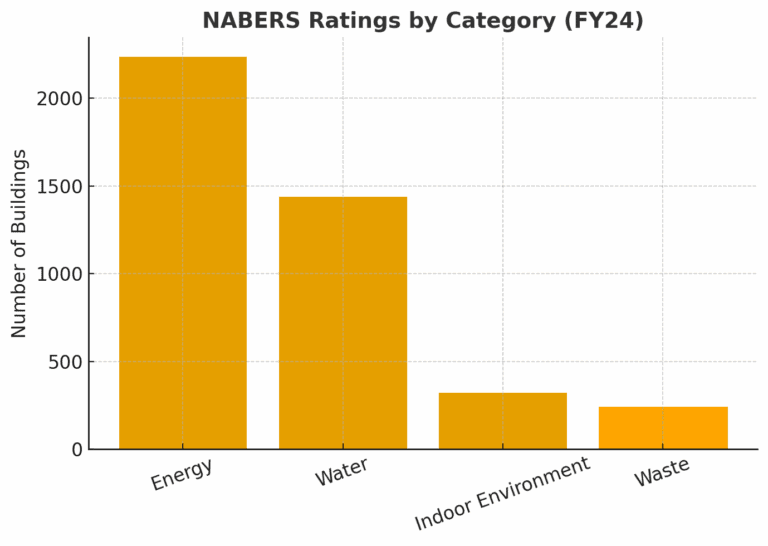
While over 2,200 office buildings in Australia hold an Energy rating, only around 240 buildings (just 10%) have a NABERS Waste rating. With the national average sitting at just 3.3 stars, waste has become the easiest opportunity for office buildings to strengthen ESG reporting and tenant appeal.  

This guide explains the assessment process step-by-step, shares strategies to improve your score, and shows how the right tools can make certification easier and more impactful. 

What is NABERS Waste?

NABERS Waste is Australia’s benchmark for how well buildings manage waste. Introduced in 2018, NABERS Waste was created to tackle rising waste levels in buildings and ensure waste management becomes a central part of the sustainability agenda. 


A NABERS Waste Verification is an independent measure of the recycling and resource recovery performance of a building. It is based on three factors:  

A NABERS Waste Rating  follows the same process as a Waste Verification and then expresses it on a star rating scale according to an industry benchmark. This allows you see how your building compares to others of a similar type. The NABERS Waste Rating is currently only available to office buildings. The rating adds transparency to a building’s sustainability performance, alongside NABERS Energy, Water, and Indoor Environment ratings. Because all data must be accurate, consistent, and verified by an accredited assessor, the results are trusted across the industry. 

Waste: The Low-Hanging Fruit of ESG Compliance

Most investors, tenants, and regulators now look at ESG as a whole. If a building has strong Energy and Water scores but no Waste rating, it’s seen as an incomplete picture. Waste is often the missing piece; and in sustainability reports or GRESB benchmarking, that gap stands out. In FY24, out of 2,319 buildings in the NABERS system in Australia, only 240 hold a Waste rating (just over 10%). By contrast, more than 2,200 have Energy ratings and over 1,400 have Water. 

However, Waste has become one of the easiest and most impactful areas for buildings to strengthen their ESG performance. The trend is clear: NABERS Waste ratings have grown steadily over the past four years (FY21–FY24), as more owners and managers realise the opportunity. A key reason is that improvement is genuinely within reach. The current national average rating sits at just 3.3 stars, which means most buildings have significant room to grow. Even modest changes, such as adding an organics stream, reducing contamination, or improving supplier data quality, can lift a rating by half a star or more. 


Furthermore, a NABERS Waste Rating is valuable far beyond its “stars on a certificate”. A NABERS Waste Rating can be leveraged for Global Real Estate Sustainability Benchmark (GRESB), Australian Sustainability Reporting Standard (ASRS) AASB S2 (Scope 3 Emissions), Green Star Performance, corporate ESG reports. (View Section 9 for more details on different ratings and certifications). 


In other words, waste is the “low-hanging fruit”: relatively untapped, highly visible, and often easier to improve than energy or water performance. For buildings looking to strengthen ESG credentials quickly, starting with waste is a smart move. 

Understanding NABERS Waste Verification/Rating

NABERS Waste Verification/Rating uses a rigorous data collection and verification process. With a star rating (available for office buildings only), you get all the insights of the verification (including the detailed report) plus an easy-to-understand star rating certificate that you can use for marketing and compliance.

Key Drivers of Obtaining a Rating

A NABERS Waste Rating delivers benefits that go beyond environmental impact, helping with compliance, reporting, costs, and stakeholder trust.

Types of NABERS Waste Ratings

There are two rating scopes available for offices:

Both base building and whole-building ratings use the same star scale (0-6 stars), but they have different benchmark bands. Whole-building ratings have higher thresholds for achieving the same star ratings. The benchmark for Whole Building Rating is 6% higher than Base Building Rating.

Data Types

There are two types of data sources for NABERS Waste Rating process: Primary Data and Secondary Data.

Primary Source can be one of the following:

Important: From 1 January 2026, external bin weight becomes mandatory (refer to section 3 or NABERS Waste Rules V2.1). 

Secondary Source is Daily Bin Count, highlighting movements per service across one full calendar month. NABERS allows for <20% variance to pass. 


The preferred approach is to capture external bin weights from on-site scales: this allows the assessor to also complete the secondary source bin count (reconciling the QTY of bins from supplier data) and is the most accurate/granular weighing system. 


Both data types are required to pass the verifications checks and receive no penalties to overall recycling rate.

New NABERS Waste Ruling V2.1 (June 2025 Updates)

NABERS has released version 2.1 of the Waste Rules, introducing several important changes that building owners, facility managers, and assessors need to be across. These updates are designed to tighten data quality, reduce inconsistencies, and bring assessments closer to “real-world” waste outcomes. Here’s a snapshot:

👉 What this means for you: These rule changes put a sharper focus on data integrity. External bin weighing and verified dockets reduce the risk of inaccurate reporting, while expanded Dry Waste requirements align assessments more closely with circular economy goals. Sites that prepare early (i.e., updating waste contracts, engaging cleaners, and ensuring robust data capture) will be better positioned for smooth NABERS assessments in 2026 and beyond. 

Eligibility and Prerequisites for Getting Rated

Before diving into the NABERS Waste process, it’s important to confirm that your building is eligible and to understand what prerequisites must be in place:

Is My Building Type Eligible?

Most building sectors (e.g. shopping centres, hotels, hospitals) can use the NABERS Waste Platform and are eligible to get a Waste Verification report. At present, only commercial office buildings can receive a NABERS Waste Rating. Both base building and whole-building options are available.  

Do I Have Enough Data?

A full 12 months of operational waste data is required, covering all core streams such as general waste, mixed recycling, paper/cardboard, organics, and glass. New buildings or those under refurbishment may need to wait until stable data is available. 


Our Accredited NABERS Waste Assessors often ask our clients for the following:

Tip: Start tracking your waste as early as possible. Our platform, Bintracker, allows for daily lodgements of waste volumes/weights by stream. If you only have partial data currently, plan to gather the rest before seeking a formal rating.

Do I Have the Appropriate Waste Infrastructure?

To participate effectively, your building should have a waste management setup that separates waste into appropriate streams. NABERS Waste ratings expect data on several core streams: General Waste, Co-mingled (mixed) Recycling, Paper & Cardboard, Organics, Glass, Metals and Composite.

Tip: Work with your contractor to ensure you have data for each stream available. If something was not tracked (say you didn’t measure organics because you have no organics bin), that’s okay, it will just be zero if you truly don’t have that stream. But if organics waste is going into general waste due to no separate bin, recognise that in improvement plans. For rating purposes, you must report whatever streams exist and everything should sum up to the total waste generated by the building.

Additionally, having a consistent waste contractor or system over the 12-month period is important – if you changed contractors or had gaps, ensure you still have complete records of waste during transitions. 


Another prerequisite is knowing your waste infrastructure: how many bins you have, their sizes, how often they’re collected, and where the waste is going (which facilities). The NABERS process will ask for details like waste contract information and bin types on site as part of the setup, to ensure all waste sources are captured.

Do I Need an Assessor?

All NABERS Waste ratings must be conducted by an accredited assessor, who will verify your data, perform site checks, and submit the rating. Building owners cannot self-rate. In many cases, the assessor can also help you determine if you meet all other prerequisites and guide you in gathering any missing pieces before officially starting the rating. Typical Assessors’ list of tasks include (but not limited to):

Where Do I Sign Up?

Finally, you will need access to the NABERS Waste Platform. Anyone can sign up for a NABERS account, but to get your building onto the Waste Platform, you (or your assessor) will fill out a Building Setup Information Form for NABERS. Once set up, you can input or upload your data. The key is to have the digital infrastructure ready, since the official rating calculation will be done through this platform.

Step-by-Step Process to Obtain a NABERS Waste Rating

Achieving a NABERS Waste rating involves a structured process. Below is a step-by-step guide for building owners of office buildings, from initial engagement to receiving your certificate. Each step is critical to ensure the rating is accurate, credible, and reflective of your building’s performance.

Step 1: Engage an Accredited NABERS Waste Assessor

The journey begins with selecting a qualified professional to conduct the rating. NABERS Waste ratings must be performed by an independent Accredited Assessor who is trained in the waste rating methodology. The assessor’s role is to verify data, perform audits or site checks, compile the results, and submit them to NABERS for certification.

Tips: It’s wise to engage the assessor early – even before your full 12 months of data is ready. A good assessor can advise on setting up your data collection approach, identifying any potential issues (e.g. a missing waste stream or need for additional measurement), and scheduling audits at the right times. 

If you lack internal capacity, the assessor can take on tasks like data entry, coordinating with contractors, etc. Ultimately, the assessor will be your key partner to ensure the rating is done correctly and in compliance with the official Rules.

Step 2: Collect Waste Data and Records (12-Month Data Collection)

A NABERS Waste rating hinges on one thing: a full year of reliable data. You’ll need 12 consecutive months of records covering every waste stream leaving your building. At minimum, track General waste (landfill) and Recycling streams (paper, cardboard, commingled, organics, glass, etc.). You can source data from:

Important: The data must cover exactly 12 months, with no gaps. Missing months or generic estimates will drag down your data quality score. Monthly uploads are best practice. They let you spot anomalies early and make rating time far smoother. NABERS requires mandatory reporting for core streams. 

Step 3: Conduct Waste Audits (On-site Measurements and Verification)

Waste audits give your data credibility. They go beyond invoices to confirm two things NABERS requires: contamination and density. Your assessor will organise these.

Audits are also powerful diagnostics. They reveal what recyclables are ending up in landfill, and where new streams (like coffee cups or e-waste) could be added. Photos and reports can double as tenant education tools. 

Timing: For large offices, audits usually take longer. Schedule during normal operations (mid-week is best) and coordinate with cleaners to hold back waste until it’s inspected.

Step 4: Compile Documentation and Evidence

With data and audits complete, the next step is packaging everything for your assessor. Clear evidence is essential to prove your data is valid and NABERS-compliant.

Step 5: Submit the Data and Receive the NABERS Waste Rating

The final step is simple: your assessor uploads all data into the NABERS Waste Platform and submits the application. For offices, the system calculates your 1–6-star rating based on benchmarked data. 

NABERS’ National Administrator reviews the submission, checks for accuracy, and, if all is in order, certifies your result. You’ll then receive:

From there, it’s time to celebrate: display the certificate in your lobby, publish it online, and brief tenants and investors. Remember, the rating is valid for 12 months. NABERS encourages annual renewals to keep performance data fresh and drive year-on-year improvements. 

Don’t worry if your first score is lower than hoped. Most buildings start modestly and climb over time. Some even set multi-year star targets and use each rating cycle to measure progress. High performers (5 or 6 stars) often gain recognition through industry awards or case studies, positioning their buildings as sustainability leaders.

Tip: You do have the option to opt out on disclosing your star rating if you wish to.

Using Bintracker to Support Certification Process

Every step of the NABERS Waste journey is easier with the right tools. For existing Bintracker users, the matrix below maps out how Bintracker supports each stage of the step-by-step process, helping you save time, improve data quality, and maximise your rating outcome.

Yining Su

Senior Waste Consultant (NSW) & Head of Building Performance | NABERS Waste Accredited Assessor and TRUE Waste Advisor

Yining holds a Ph.D. in Geography from the University of Hong Kong, where she researched influences on public environmental behaviour. She has published several peer-reviewed articles and also holds M.Eng and B.Eng degrees in Landscape Architecture.

Sheridan Kelly

Senior Waste Consultant (QLD) & Head of NABERS | NABERS Waste Accredited Assessor and TRUE Waste Advisor

Sheridan has 10 years of experience in waste management with Veolia and Cleanaway across hydrocarbons, solid waste, and hazardous waste. She holds a B.Sc. in Environmental Science and is a NABERS Waste Accredited Assessor.

Keep Up-to-Date

  • Latest @ Gurru
  • Industry News
  • ESG/Waste Regulation Updates
real-time icon
1. Engage an Accredited Assessor

Appoint a certified professional to run the NABERS Waste process. 

Local Delivery. National Capacity.

Our team of 9 Accredited NABERS Waste Assessors and 2 TRUE Waste Experts cover all major Australian states and cities.  

2. Collect 12 Months of Waste Data

Gather contractor reports, bin counts, and weighbridge records for a year.

All Data in One System.

Bintracker consolidates supplier imports, bin counts, and on-site weigh data into one dashboard.

3. Conduct Waste Audits

Perform on-site checks to measure contamination and recycling accuracy.

Verified Data = Reliable Audits

Our NABERS-accredited assessors perform audits using validated data from Bintracker. View audit results directly via the portal. 

4. Validate Data Quality

Compare supplier vs secondary data, remove errors, confirm compliance.

Bridge Data Gaps.

Bintracker validates data against supplier invoices, runs variance checks & issues outlier alerts. 

5. Compile Documentation

Package verified data, audit evidence, and building info into one submission.

NABERS-Ready Exports.

Bintracker generates NABERS-ready exports with supplier + bin count validation.

5.1 Due Diligence on Material Recovery

Bonus points for best and highest use of materials.

Gain Bonus Points.

Gurru provides due diligence check on truck registration, dockets records, GPS, CCTV, etc. for a verified MRS.

transparency icon
6. Submit Assessment to NABERS

Assessor submits validated data to NABERS Waste Platform.

Submission-Ready Data.

Bintracker ensures data is fully validated and submission-ready, reducing assessor queries.

7. Receive Rating & Continuous Improvement

NABERS issues rating or verification report.

Data-led Actions.

Bintracker/Gurru provides dashboards, tenancy portals, ESG reporting, and helps track diversion rates.


Ready to Boost Your Ratings?
Capture. Validate. Assure. Automate.
Book a Demo

How to Improve Your NABERS Waste Rating

Getting a NABERS Waste rating is only the first step. The real progress comes from improving it over time. In this section, we’ll share practical strategies to lift your score and show how Bintracker makes each step easier. If you’re already a Bintracker user, you’ll also learn how to get the most out of your subscription when preparing for a rating or renewal.

Data Accuracy

Data accuracy is the bedrock of NABERS. But invoices arrive in mixed formats, weights are often estimates, and reconciling data is a nightmare. To fix this:

⚡Accurate Data Capture via Bintracker

With Bintracker, this entire process becomes far simpler: supplier data is imported directly, cleaned, and converted into NABERS-ready formats, while smart scales and daily bin counts provide extra verification. The result is one consolidated dashboard showing accurate and defensible waste figures. Here’s an overview of relevant features directly related to this step in the rating process:

Data Quality

Having lots of data is great, but data quality is what NABERS cares about. Gaps, outliers, or mismatches between sources drag down your data quality score. Data quality penalties can impact the outcome by up to 35%. To safeguard it:

⚡ Validate Data via Bintracker

Having lots of data isn’t enough, NABERS cares about whether that data is reliable and defensible. The challenge is that data sources rarely line up neatly: supplier weights may not match bin counts, outliers distort averages, and gaps in reporting drag down your data quality score. To protect your rating, buildings should:

Automate Processes

Accuracy and validation only hold if data is consistent across 12 months. Manual entry leaves too much room for missed counts, mis-logged weights, or guesswork. A single gap can cost you half a star.


That’s why automation isn’t a nice-to-have, it’s the only way to guarantee accuracy at scale. With Bintracker, you spend less time chasing spreadsheets and more time improving what matters: contamination, diversion, and tenant engagement:


  • No missed records. Daily bin counts and onsite weighing flow directly into the system, keeping your dataset continuous. 
  • No inconsistent formats. Supplier invoices are imported and standardised automatically, ready for NABERS. 
  • No unnoticed errors. Outliers and anomalies are flagged in real time, rather than discovered months later. 
  • No guesswork. Calibrated Bluetooth scales capture true weights at the source, removing reliance on estimates. 


But remember: not everything can be automated. Some checks, like contamination audits, supplier due diligence, or investigating anomalies, require professional judgment. That’s where NABERS-accredited assessors step in to assure data quality and guide improvements.

Earn ‘Bonus Points’ via Material Recovery Score System

Material Recovery Score (MRS) is a measure of the quality of the end of-life outcome of waste leaving a commercial building. Every waste type has a NABERS standard MRS.

Our NABERS Accredited Assessors offer a Due Diligence reporting service designed specifically to support this NABERS reporting criteria. This includes:  

  • Comprehensive verification of supply chain integrity through tipping dockets, GPS tracking, CCTV checks, and facility acceptance criteria; 
  • NABERS-Ready chain-of-custody report that proves your waste went where the supplier said it did. 


Check out section 6.4 for a full breakdown of our NABERS Waste services.

Where You Need an Expert: Gurru’s NABERS Waste Services

When it comes to NABERS, there’s always a human layer of assurance required. That’s where our NABERS Accredited Waste Assessors come in. They provide the expert judgment that ensure your data stands up to NABERS’ highest standards. The matrix below maps out these services, what they include, and who they’re ideal for:

Actual vs. Estimated Data Identification

For buildings relying heavily on supplier reports, or those penalised for poor data quality.
  • Identifies reliance on estimated weights, substituted densities, or repeated values
  • Recommends steps to shift to actual measured data via external bin weighing & calibrated scales.

NABERS Performance Monitoring

For portfolios seeking continuous improvement/risk mitigation before the annual audit.
  • Ongoing reconciliation of bin counts, supplier data, and onsite weighing.
  • Early detection of failed services, outliers, and contamination.
  • Performance monitoring, regular reviews with site teams.

NABERS Waste Assessment & Certification Support

For buildings needing official NABERS certification to meet tenant or ESG reporting requirements.
  • Full assessor service: audits (contamination, density, composition), portal lodgement.
  • Outlier explanations, administrator liaison, and certification management.

Due Diligence Reporting (MRS)

For owners needing peace of mind on supplier practices or wanting third-party validation at an affordable cost.
  • Verifies supply chain integrity with tipping dockets, GPS, CCTV, etc.
  • Acceptance criteria checks.
  • Provides chain-of-custody assurance.

Pre-Assessment NABERS Report

For buildings preparing for their first rating or wanting to improve on past NABERS Waste results.
  • Reviews historic NABERS results
  • Reconciles supplier & bin count data. Highlight any gaps.
  • Forecasts potential ratings.

General Waste Composition Audits

For buildings with low recycling rates or those preparing for implementing additional streams.
  • Identifies missed opportunities in General Waste.

One Step Further: Improving Your Building’s Waste Performance

Obtaining the rating is not the end – it’s the beginning of a continuous improvement journey. The real value of NABERS Waste is that it illuminates where you can do better and tracks the impact of changes. Here are practical strategies for improving your building’s waste performance and increasing your NABERS Waste score over time:

Add More Recycling Streams

Start with the essentials: landfill, mixed recycling, paper/cardboard, and organics. From there, consider extras like soft plastics, e-waste, batteries, printer cartridges, and coffee cups. Every extra stream means less going to general waste and a stronger diversion rate. Be sure to provide appropriate bins and clear signage when rolling out a new stream and communicate with tenants about what can go in each.

Reduce Contamination

It’s not just about recycling more but recycling better. Audits often reveal common mistakes, like food scraps or plastic bags in recycling bins. Clear signage, consistent bin systems, and tenant education make a big difference. Even simple steps like making sure every kitchenette has the same bin setup help reduce errors. Some buildings place visual prompts (like posters above bins or even transparency panels on bins so people see what’s inside); others run refresher sessions or share quick “Recycling 101” flyers. Moving forward, continually monitor contamination by doing mini-audits or asking cleaners for feedback on common mistakes they observe.

Optimise Your Bin Setup

Our environment shapes our behaviour. A smart setup turns correct recycling into second nature, making good habits easier and bad habits harder: 


  • Replace under-desk bins with centralised hubs. Desk bins tend to fill with mixed waste. Centralised stations with clear labels of all streams encourage people to separate correctly.  
  • Intuitive Signages: Use clear signage with iconography and examples of what goes (and doesn’t go) in each bin. Avoid jargon; use simple terms. Also label bins in back-of-house areas for cleaners so they don’t mix contents by mistake. 
  • Space for More Streams: If you plan to add streams like batteries or e-waste, create a collection point (like a “recycling hub” in the lobby or mail room) where these can be dropped off safely. Even if these aren’t everyday streams, periodic collection drives can capture significant waste that would otherwise go to landfill. 
  • Organics Management: For food waste, have measures to prevent odour or pest issues, e.g., using compostable liners, frequent removal & cleaning of bins. Tenants will be more willing to separate food waste if the bins are clean and don’t smell. Check out our blog for more tips on how to manage your organics waste. 

Reduce Waste at the Source

The best waste is waste that never occurs. Engage tenants in waste minimisation strategies: encourage double-sided printing (or better, digital documents instead of printing), promote use of reusable cups and bottles (perhaps coordinate a building-wide giveaway of reusable coffee cups or water bottles), and work with any on-site cafés or caterers to minimise disposables (e.g., bring-your-own-cup discounts, eliminating single-use plastics in cafeterias).

Bring Everyone On Board: Tenant & Staff Engagement

Improving waste performance isn’t something building owners can do alone. Waste success depends on the people using and handling the bins every day. When they’re engaged and empowered, lasting change becomes possible. 

  • Make it a Shared Responsibility. Start with a clear message: waste is everyone’s job. Whether through a kick-off meeting, memo, or tenant roundtable, set the tone that reducing waste is a shared goal with shared benefits.  
  • Work with Tenants, Not Around Them. Instead of broad campaigns, focus on tenant-specific data. Bintracker makes it possible to spot underperforming tenants and share personalised reports. Framing this positively (“Here’s where we can help you improve”) is more effective than blanket reminders. Don’t underestimate the power of gamification: simple leaderboards or recognition for “best performing floor” can spark healthy competition and keep waste top-of-mind. 
  • Empower Cleaners. Cleaners are often the first to notice contamination or misuse. Train and encourage them to report issues rather than just emptying bins.  
  • Create Feedback Loops. Open channels for quick feedback: a shared email, tenant portal form, or even informal check-ins. Tenants should feel comfortable saying, “We need more paper bins,” just as cleaners should feel safe pointing out, “Tenant X keeps tossing food into recycling.” Acting quickly on these insights builds trust and momentum. 
  • Educate Without Overloading. Education should be ongoing but not overwhelming. Mini sessions, short flyers, or digital signage work better than one-off information dumps. Constant education without bombarding people is a delicate balance. Keep it simple, visual, and consistent across the building.

How Bintracker Underpins Long-term Waste Improvement

At the end of the day, you can’t improve what you can’t see. Many buildings struggle not because they lack effort, but because they lack clarity.

Bintracker provides granular and verified data, captured on a consistent basis & visualised in one single interactive dashboard. That level of data quality makes action possible. Without it, you’re guessing. With it, you can make targeted decisions that lift recycling rates, cut contamination, and improve NABERS scores. 

Equally important, Bintracker opens the door to tenant engagement. Because data is captured at the tenant or floor level, you can share results directly with occupiers. That means: 

  • Tenants see their own impact and take ownership of improving performance. 
  • Buildings can “spot-treat” underperforming tenants rather than rolling out blanket campaigns. 
  • Automatically generated leaderboards and tenant waste reports spark healthy competition & keeps people motivated to improve. 

The combination of clarity of data + active tenant participation is what takes buildings from making one-off fixes to long-term, measurable improvement.

Other Ratings & Certifications

While NABERS Waste has become the most recognised benchmark for office buildings in Australia, it is not the only framework. Buildings and organisations are increasingly expected to demonstrate performance across multiple certifications, each with its own focus, methodology, and global reach.

The “Big Three” in Australia

Besides NABERS, the other two most used certifications in our market are: 

  • Green Star (Green Building Council of Australia): A performance-based rating system that measures waste generation and recycling rates, and recognises policies such as Operational Waste Management Plans or Zero Waste to Landfill commitments. 
  • GRESB: A global reporting framework for real estate and infrastructure, rewarding strong waste reduction practices, tracking systems, and third-party certifications like NABERS and Green Star. 

Together with NABERS, these three focus primarily on waste policy, total waste generated, and recycling/diversion rates, offering a relatively simple “snapshot” metric of performance.

Global and Specialist Certifications

Beyond these, there are frameworks that dig deeper into verification, transparency, and behavioural change: 

  • UL 2799: A global standard emphasising landfill diversion, material lifecycle, and supply chain transparency. Requires robust data documentation and third-party verification. 
  • TRUE Waste (Green Business Certification Inc., US): Focuses on facilities and businesses, with an emphasis on employee engagement, financial tracking of disposal costs, and leadership commitment to zero waste. It goes beyond volumes, rewarding cultural change and innovation. 
  • These programs are less common in Australia but are gaining traction with multinational companies and sustainability-driven portfolios. They reflect a shift from simply “how much you recycle” to “how well you verify, engage, and innovate.”

Waste: The ESG Advantage You Can’t Afford to Miss

If you’re looking for a fast, defensible lift in ESG performance, start with waste. The 2025 rule updates make one thing clear: data quality and verification will decide your score and your credibility. Set yourself up now: lock in an accredited assessor, establish external bin weighing, standardise supplier reporting, and automate secondary verification so there are no gaps, guesses, or “too-perfect” numbers. 


Ready to turn intent into a certified result (and build a repeatable, portfolio-wide system)? 


ESG Wins Start With Data

Don’t just collect data — clean it, confirm it, action it.

Or let us handle the heavy lifting.

Frequently Asked
Questions

How much does a NABERS Waste Rating cost in 2025?

There are two parts to the cost: 

  • The administration / lodgement fee charged by NABERS.  
  • The assessor’s fee, which varies depending on the building size, complexity, and how much site work and audits the assessor needs to do. NABERS does not set a standard assessor fee; you need quotes from NABERS-accredited assessors.  


As of 1 July 2025, NABERS has introduced a revised pricing structure, which includes increases beyond CPI, so both the lodgement/administration fees and related costs are higher than in previous years. Refer NABERS introduces new pricing structure following major review | NABERS for more details.

Yes. Key additional costs include: 

  • Assessor fees: site visits, audits (contamination audits, composition audits, bin density audits), data verification. These are charged by the assessor.   
  • Audits: the assessor or building may need to conduct specific audits to satisfy NABERS Rules. If you skip audits, standard/default values apply, which may reduce the rating.  
  • Data collection / management systems: you may need to purchase or maintain systems (or pay contractors) to collect accurate waste weights, bin counts, run composition audits, log/track data in the NABERS Waste Platform, etc.  
  • Internal staff time and operational changes to ensure accurate separation of waste streams, tenant coordination, documentation, etc. 
  • Possibly consultant or project management fees if you bring in a sustainability consultant to help you prepare, manage the process, or improve your rating.
  • The rating period is 12 continuous months of operational waste data. You need data for a full year to apply.  
  • After the rating period ends, there is 120 days allowance to lodge the rating with NABERS. The exact timeline depends on when data/materials are ready and when the assessor can conduct required audits.  
  • There is no single fixed “assessment duration” published publicly (for the entire process), because it depends on data readiness, audit scheduling, building type, assessor lead time. But you should expect that once you have 12 months of data, organising audits, assessor engagement, and lodgement may take some additional weeks to months. 
  • Once the rating is certified, it is valid for up to 12 months (i.e., one year). 
  • Also, NABERS has rules for “rating period” vs “validity period.” The rating period is the 12 months of data; the validity period is the post-certification period during which the rating can be used. 


Refer to NABERS Waste Rules V2.1, under 10.3 and 10.3 for more information. 

Begin gathering and verifying your waste data at least 12 months before the date you want the rating period to end. Because you need a full year of continuous data. 

If you fail to lodge the rating within the allowed period after the rating period ends (the “lodgement allowance”), your rating may still be lodged but the validity period may be reduced. That is, delays in submission after the rating period can shorten how long your rating is considered current.

NABERS Waste has two “rating scopes”: 

  • Base building: only includes wastes contracted by the building owner.  
  • Whole building: includes all wastes leaving the building (including tenant waste) if they can be reliably measured according to NABERS criteria.  


So, if you’re a tenant with sufficiently good data, you might be able to participate (especially under whole-building scope), but you must meet data measurement, reliability, and audit rules. Tenant-only ratings (just tenants without involvement of building management) are less common / more challenging unless contracts/data allow.

  • Currently, the star rating benchmarking (i.e. full NABERS Waste Rating) is only available for commercial office buildings, because the benchmarks for other sectors are not yet established.  
  • However, other building types (like retail, health, universities, apartments, hotels, etc.) can use the NABERS Waste Platform and obtain a Waste Verification Report (i.e. verify performance without an official star rating) provided they meet data and audit requirements. 

Key data requirements include: 

  • 12 months of operational waste data: weights of waste streams, bin counts or weights for each stream, reliably measured and continuous.  
  • Details of waste streams: which types are generated, how they are collected, which are mandatory, which are optional. Optional streams can boost performance if data is present.  
  • Audits: 
  • Contamination audits for recycling streams (to adjust for contamination that ends up going to landfill)  
  • Bin density audits (if actual weight data is missing for bins) to estimate weights reliably.  
  • Composition audits (for mixed waste bins) to split materials correctly for the material recovery score.  
  • Measurement reliability and data quality scoring: NABERS scores for data quality depend on whether audits have been conducted and how complete or reliable your data is. If audits or measurements are missing, default values or standard assumptions are used, which can harm your score.  
  • Platform uploads: data must be uploaded to the NABERS Waste Platform, using prescribed templates/formats.

When selecting a NABERS-accredited assessor for Waste, consider: 

  1. Current accreditation: they must be accredited in the NABERS Waste methodology. Some assessors might be accredited in Energy or Water, but not Waste. 
  2. Experience in your building type or sector: especially if aiming for whole building rating, or if your building has complex or unusual waste streams. 
  3. Audit capabilities: ensure they can perform the necessary audits (contamination, composition, density) or manage them. If they need to subcontract, check their arrangements. 
  4. Responsiveness / timeline: how fast they can access bin rooms, contractors, collect data and perform site visits. 
  5. Fee transparency: get multiple quotes, ensure the quote covers all audits, site inspections, data verification etc. 
  6. Quality of data and documentation support: good assessors will help you prepare, guide data collection, flag missing data issues beforehand. 
  7. Reputation and past ratings: check references or past work, perhaps buildings like yours.

GECA (Good Environmental Choice Australia): A third-party ecolabel that extends beyond waste volumes to cover due diligence in waste services and suppliers. It audits areas such as truck safety, modern slavery, and overall service compliance. GECA certified waste services (building-specific) pass secondary bin count validation automatically and is deemed to have a better material recovery score. But it incurs additional cost to get GECA certified.

More Like This

Word on Waste Newsletter | Q4 2025

Australia’s waste and recycling system is changing quickly, with new policies and initiatives affecting how we handle resources. In this edition of the Word on Waste Newsletter, learn about the latest industry updates, including important reductions in food waste and increasing waste fees. Discover the hidden effects of microplastics on our environment and health, along with tips to cut down on plastic use in your daily life.

Read More »