
 Welcome to our World on Waste Newsletter | Q3 2025
1. Industry News
 NATIONAL: Tackling Food Waste in Australia
Early this year, the 2024 Australian Food Pact Impact Report revealed that the food waste tonnage throughout the supply chain has decreased by 13% since 2022, marking a significant progress in Australia’s food waste reduction journey.
Despite this achievement, households still accounted for 40 percent of Australia’s total food waste. According to recent research by RMIT University and End Food Waste Australia, unclear and inconsistent labelling is a major contributor, costing the average household about $2,500 each year.
The study found that while stakeholders including manufacturers, retailers and consumers have different priorities, they all supported clear, concise and user-friendly information date labels and storage advice. However, industry progress has been limited by the lack of market advantage and concerns over additional costs potentially passed on to consumers.
Tristan Butt, CEO of End Food Waste Australia, stressed that reducing food waste through smarter labels can only succeed if government, retailers and food producers work together.
To support this effort, the next phase of the National Date Labelling and Storage Advice Project will bring together supermarkets, food brands and government to co-design, test and implement a national framework for consistent date labelling and storage advice.
 VIC: Increase In Victoria Waste Levy
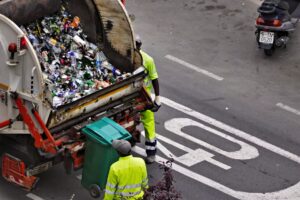
From 1 July 2025, the metropolitan industrial and municipal waste levy for Victoria will increase significantly (28%) from the current $132.76 to $169.79.
Waste Management and Resource Recovery Association of Australia (WMRR) CEO, Gayle Sloan, states that previous levy rates were far off with its neighbouring states but with the increase in waste levy, the current levy now aligns with New South Wales and South Australia. The waste levy is expected to not only increase material diverted from landfill but to also support waste management and resource recovery programs.
 What does this mean for your building and business?
An increase in waste levy would likely lead to higher costs for waste disposal.
 How can this be addressed?
- Improved waste reduction and recycling strategies within commercial offices.
- Improved education and awareness strategy on waste separation and recycling practices.
- Improved waste infrastructures such as signage and bins.
 Speak with us
Contact one of our experienced waste & recycling consultants for further advice on how to improve your building’s recycling rate and divert waste from landfill.
QLD: New Waste Strategy On The Way
The Queensland Government has recently closed its consultation for its new waste plan – Less Landfill, More Recycling. The plan focuses on reducing waste sent to landfill by identifying recycling and manufacturing opportunities. It also includes a new $130 million Resource Recovery Boost fund to support Councils’ waste initiatives and infrastructure. There have been no changes to Containers for Change refund as the government is more focused on ways to divert more landfill into recycling.
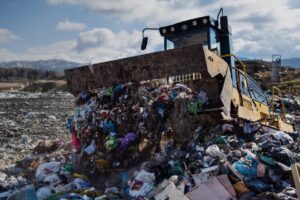
The government will also review the waste levy arrangements due to potential impacts from NSW levy rates and cross-border waste movements. From 1st July 2025, QLD’s waste levy increased from $115 to $125 per tonne, compared to last financial year.
WMRR CEO, Gayle welcomed the new plan and “looks forward to working with the Government on getting these settings right, to enable investment in resource recovery, create end markets and keep Queensland’s valuable resources in circulation longer, reducing reliance on new materials and mitigating carbon impacts.”.
The feedback received on the draft new Queensland Waste Strategy is now being considered and will inform the development of a final draft new Queensland Waste Strategy.
 NSW: FOGO Mandated for Businesses and Households
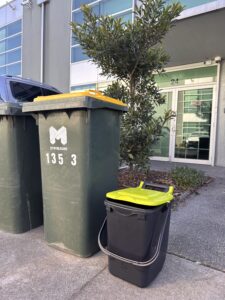
The NSW Parliament has passed legislation to mandate FOGO collection services for households by July 2030 and for businesses and institutions in stages from July 2026.
Large supermarkets, institutions and hospitality businesses must implement source-separated food organics (FO) waste collection service, starting with the largest generators from 1 July 2026 and staggered to 2030 depending on how much waste they send to landfill each week. Additionally, large supermarkets must report on the amount and type of surplus food donated to charities.
The legislation is expected to divert up to one million tonnes of organics waste from landfill each year and turn them into compost for parks, sporting fields and agriculture.
Learn more about the FOGO Mandate.
 WA: Waste and Recycling Report 2023-24
The newly released 2023-24 Waste and Recycling in Western Australia report shows the state’s recycling rate reaching 65%, a 23% increase since 2014-15.
The Perth and Peel regions are also progressing toward their 2030 target of sending no more than 15% of waste to landfill, currently sitting at 28% in 2024-25.
This milestone has been supported by the rollout of food organics and garden organics (FOGO) system across local governments in Perth and Peel. The three-bin systems with FOGO shows an average recovery rate of 58% compared to just 14% for two-bin systems.
Despite the increase in overall waste generation, municipal solid waste (MSW) has declined since 2014-15. Though, this was likely due to larger digital media consumption and lighter weight products and packaging.
The full 2023-2024 Waste and recycling in Western Report can be found here.
 ACT: New Recycling Facility in Hume
Waste management provider Veolia has partnered with the ACT Government to design, build and operate the new recycling facility in Hume.
The new facility will be able to sort paper and cardboard, glass, plastic, steel and aluminium through technology like laser optical identification with air jets to separate plastics and powerful magnets to extract magnets. Additionally, it’s building design will meet specific Greenstar requirements to reduce carbon footprint and improve wastewater management.
It is expected to process up to 115,000 tonnes of mixed recyclables each year and create over 130 new jobs. There will also be a new education space built to allow for community and school groups to visit and learn about the process of recycling.
Demolition of the previous facility will commence mid-2025, and the new facility is expected begin operation in 2028.
 SA: Get Ready for the Upcoming Plastic Bans!
From 1st September 2025, the following plastic items will be banned:
|
Plastic cutlery and drinking straws attached to drink and food containers.
Exceptions: plastic wrapping of straws/cutlery attached to container. |
 |
|
Plastic soy sauce containers (<30 ml) including soy sauce fish containers.
Exceptions: Soy sauce sachets of any size. |
|
|
Pre-packaged expanded polystyrene (EPS) cups or bowls containing a meal (including noodles or pasta with flavouring).
Exceptions: Heat resistant plastic packaging that does not comprise of EPS and plastic-lined/-coated paper cups used for pre-packaged meals. |
|


Find out more about other plastic items that have already been banned here.
 TAS: 1.2 M Containers in 4 Days
In just 4 days since the scheme’s launch on 1st May, 1.2 million containers were deposited in Recycling Rewards, Tasmania’s new container deposit scheme.
Majority (62%) of those were aluminium, 25% PET plastic bottles and 12% glass bottles. More than $100,000 has also been put back into the pockets of Tasmanians or donated to one of the 120+ donation partners.
The top 10 highest collection were all based at shopping centres with one centre collection over 113,000 cans in just 4 days. There are currently 40 refund points with more still being added to the network.
Find out more about Recycle Rewards or find your nearest refund point in Tasmania.
2. Waste Insight: Microplastics
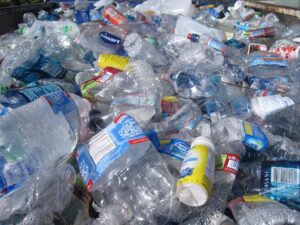
Plastic Free July might have ended, but the impacts of plastics and microplastics are still very much present and persistent in our day to day lives. This section aims to provide you with necessary information and actionable steps to cut down on not just visible plastic waste, but also the hidden microplastics that come from everyday items.
 What are Microplastics?
Plastics do not biodegrade; they simply break down into tinier and tinier pieces.
Marine scientist, Richard Thompson, also known as the godfather of microplastics, first coined the term microplastics in 2004. Despite the presence of microplastics since 1960s, it was never confirmed by other scientists.
Richard realised that mechanical degradation of large, visible fragments of plastic resulted in the accumulation of tiny microplastics, measured anywhere between 1 nanometre and 5 millimetres wide, in the environment.
Sources of microplastics
There are two different types of microplastics:
- Primary microplastics: Made intentionally small for products like cleaners, cosmetics and personal care products.
- Secondary microplastics: Created from slow disintegration of larger plastics like plastic bags, bottles, and other discarded plastic items. These make up the majority of microplastic pollution.
As Richard continues to find out its impact on humans and wildlife, “Everywhere we looked, we found evidence of microplastics” – rivers, and snow from near the summit of Mount Everest.
 Microplastics on the environment
The Great Pacific Garbage Patch, a collection of marine debris in the North Pacific Ocean, are almost entirely made up of microplastics.
Though often invisible to the naked eyes, their impact is significant. Microplastics that accumulate on/near the surface of the ocean block sunlight from reaching plankton and algae below, threatening marine food chains and ultimately affecting humans.
On land, microplastics also harm wildlife. A recent study found that microplastics disrupts bees’ ability to recognise scents leading to failed pollination. As the key pollinator of crops, this poses a risk to our ecosystem and food supply. Microplastics have also been found in honey and beeswax, suggesting they may enter the human food chain.
 Microplastics in our body
Plastic fragments have been found in various parts or fluids of the human body, including the lungs, placenta, brain, testicles, nose tissue at the base of the brain, penises and human stool. They typically enter the body through ingestion, inhalation and skin contact and can travel through the bloodstream to the rest of the body.
While little is known about the potential impacts of microplastics on human health, chemicals like BPA commonly used in plastic productions, are linked with health risks such as hormonal disruptions, certain cancers, respiratory diseases and skin irritation.
So, what is Australia doing to tackle microplastics?
While most states (except VIC and SA) have banned microplastics in products, the biggest source of microplastics remains the fragmentation of larger plastic items in the environment. This highlights the need for reduction in production of wider range of plastic products.
Australia continues to phase out various single-use plastics through state-based bans, covering items like plastic straws, cutlery and bags. Currently, SA is leading the ban with over 16 items. Find out what plastics your state has committed to the ban here as of September 2024.
While the ban has significantly reduced the number of banned single-use plastics found in litter (77% in NSW since 2019), there were still many takeaway food containers and plastic bottle lids found across the environment.
Additionally, the Australian Government invested $100 million from 2019-2023 to deliver projects to protect coasts, oceans and waterway, including waste recovery, recycling and clean up. The NSW Government has also been undertaking microplastics monitoring in 120 estuaries to identify the source of microplastics to better manage interventions and reductions.
Be Part of the Plastic Pollution Solution
While plastic has become a crucial part of our everyday lives & living plastic-free is unrealistic – we are not powerless! Here are some simple swaps you can take:
- Bring your own cup or use a mug when dining in.
- Avoid personal care products that contain microbeads (look for polyethylene or polypropylene)
- Use loose-leaf tea instead of tea bags.
- Opt for e-receipt instead of printed ones.
- Buy 100% cotton clothing instead of synthetic fabrics.
Let’s do our part to reduce single-use plastic waste every day at home, work and even at your local café!
Before You Go …
From waste levies to plastic bans, it’s clear that sustainability is shifting rapidly across Australia. Every small action we take helps keep resources in circulation and waste out of landfill.
Try one of the swaps we shared to cut down on plastics. We also published a blog on the topic, What’s in Your Bag, Body, and Bin? – where we dived deeper into all things plastics and more actionable tips for both at home and in the office.
 Forward this newsletter to a colleague or friend who’d find it useful.
Connect with our team to explore the Waste Engage program, now rolling out in lobbies across the country.
 Stay tuned for more details for our next Waste Webinar on NABERS & Compliance, a short 30-minute session packed with insights and practical takeaways.
Together, we can turn today’s challenges into tomorrow’s solutions.
Rolling out an organics stream in your shopping centre? Learn the four steps successful retail centres use to improve tenant participation, reduce contamination and prepare for FOGO requirements.
Rolling out an organics stream in your shopping centre? Learn the four steps successful retail centres use to improve tenant participation, reduce contamination and prepare for FOGO requirements.
Managing waste data across multiple offices? Discover how Bintracker’s Multi-Tenancy Portal simplifies reporting and improves visibility across your entire footprint.