
Organics Matter: Why Diverting Food Waste Is Essential – and How to Do It
Diverting food waste from landfill is one of the most impactful actions we can take to reduce emissions and recover valuable resources.
In Australia, food and organic waste generates around 13 million tonnes of greenhouse gases annually – largely due to methane produced during decomposition in landfill. This blog explores the environmental cost of food waste, the benefits of recycling organics, and how policy changes and simple actions at home or in the office can make a difference.
If you’re looking to improve your sustainability practices, this guide offers data-backed science to explain why it’s important, and practical tips to get started.
Emissions Created by Organic Waste
Organic waste is created by plants and animals, which is broken down into carbon dioxide, water and methane by micro-organisms and other living things (DCCEEW, 2025). It’s a key contributor to waste-related emissions, with an estimated 20% of anthropogenic (human-made) methane emissions coming from the decomposition of food and organic waste in landfills, open dumps and wastewater (UNEP and Climate and Clean Air Coalition, 2021). These emissions occur because when disposed of as landfill, food and organic waste break down without access to oxygen (due to be being disposed of in plastic bags or suffocated by other non-biodegradable waste), which has the toxic effect of causing microorganisms to produce both carbon dioxide and methane gas.
In Australia, organic waste in landfill generates 13 million tonnes of greenhouse gas emissions each year. These emissions can be reduced by ensuring that food is not sent to landfill, via:
- Only buying what you need
- Freezing or eating leftovers
- Donating food
- Adding organic waste bins at home and in your building
- Recycling food waste via the soil
Recycling Organics at Home
Government Research has shown that in Victoria, as much as 88% of household food waste is avoidable (Source: Food Waste and Social Practices in Australian Households). There are numerous ways you can recycle food waste at home, such as:
- Contacting your local council about their organics service: In 2022-23, 28% of Australians had access to a kerbside food and garden organics (FOGO) bin. Check with your local council to see if these bins are available.
- Getting involved in your community garden with a compost program: If your area has one, this is a great way to reuse your waste, grow produce and engage with like-minded people in your local community.
- Creating an at-home compost set up: If you don’t have access to either a kerbside FOGO service or a community compost, you can always DIY it! Whether you’re in a small apartment or have a house with a garden, there’s an option for you.
- Make a DIY indoor compost bin: A perfect solution if you don’t have outside space and you are starting small. We found this useful article to explain how to do it in just 30 minutes: How to Make a DIY Indoor Compost Bin in 4 Easy Steps
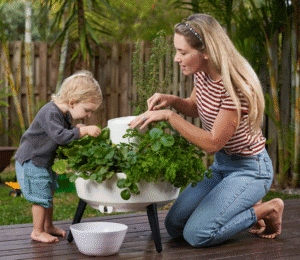
- Purchase a Worm Farm Pot Plant: Another great way to compost if you have limited space and want something that looks pretty! We are happy to be working with an Australian company called Composta who makes these and are offering 20% of by using the unique code ‘GURRU’. Learn more and purchase on their website.
- Create a compost pit or bin in your garden: The ultimate method with the additional benefit of creating “black gold” soil that you can use to make your garden thrive! Here is a useful blog that gives you step-by-step instructions: How to Compost Effectively. Also, contact your council to ask if they subsidise the cost of creating your own at-home compost!
Benefit of Recycling Food Waste
If you cannot prevent, save or donate food that is going to go to waste, recycling is the next best option to manage food waste and avoid sending it to landfill.
By returning today’s food waste to the soil through compost, soil enhancers and mulch, you not only recover resources, you contribute to enhancing Australia’s soil health as they provide nutrients, increase water retention in the soil and improve the structure of soil (DCCEEW, 2025). Recycling food waste means you can turn waste into valuable products such as compost, soil enhancers, mulch and even biogas.
Currently, more than half of the organic waste generated in households is disposed of in landfills (Madden, et al. 2023), meaning that this valuable resource is wasted.
Recycling Organics in the Office
The first step to recycling your organic waste in the office is knowing whether your office or business already has an organics stream. If so, your work is done, and you can focus on using it and educating your colleagues on how to use it!
If your office or building doesn’t already have an organics stream, there’s a few options:
- If you’re looking to introduce an organics service and don’t know where to start, give Gurru a call and our Waste Consultants can help you out.
- If you don’t have a lot of food waste and want to do something yourself, you can set up worm farm pot plants, purchase a food waste dehydrator, or set up another in-house system such as a Bokashi bin.
How Policy Changes Will Mandate Future Organic Waste Requirements
Australia’s National Waste Policy includes the target of halving the amount of organic waste sent to landfill by 2030. While a key component to this is reducing food waste, diversion of waste away from landfill plays a large part. Additionally, in each state, policies are being introduced to reduce landfill waste and, in some circumstances, increase organic recycling specifically.
For example, the New South Wales Parliament has passed legislation to mandate Food Organics Garden Organics (FOGO) collection services for households by July 2030 and for businesses and institutions in stages from July 2026. Large supermarkets, institutions and hospitality businesses must implement source-separated food organics (FO) waste collection service, starting with the largest generators in 2026.
Landfill levy across all states will continue to increase each financial year, with Victoria increasing by 26% from 1 July 2025. Recycling organics are expected to be lower in cost in the long run.
Along with waste-related policies, scope 3 emissions reporting requirements mean waste emissions will become a higher focus area, meaning reducing landfill waste and increasing organic diversion will become a priority in your building.
Ready to Improve your Organic Waste Outputs?
Diverting food waste from landfill at home or in the office isn’t just a nice-to-have – it’s a powerful way to cut emissions, recover valuable resources, meet your ESG targets and support a healthier planet. Resource recovery is an important part of creating a more circular economy, and organics recycling is an easy and effective way to ensure food waste doesn’t go to waste!
Gurru specialise in helping commercial buildings manage waste more effectively, using our innovative waste software, Bintracker, to get accurate data about your waste outputs, so we can provide useful insights and tailored solutions for each office and building. We focus on setting up the right recycling streams, such as organic bins, in buildings as well as educating tenants on how to use bins correctly to get the best results.
If you’re still unsure of the how or why of organics recycling or you want to add an organics stream to your building, reach out to Gurru and one of our expert Waste Consultants can help you!